




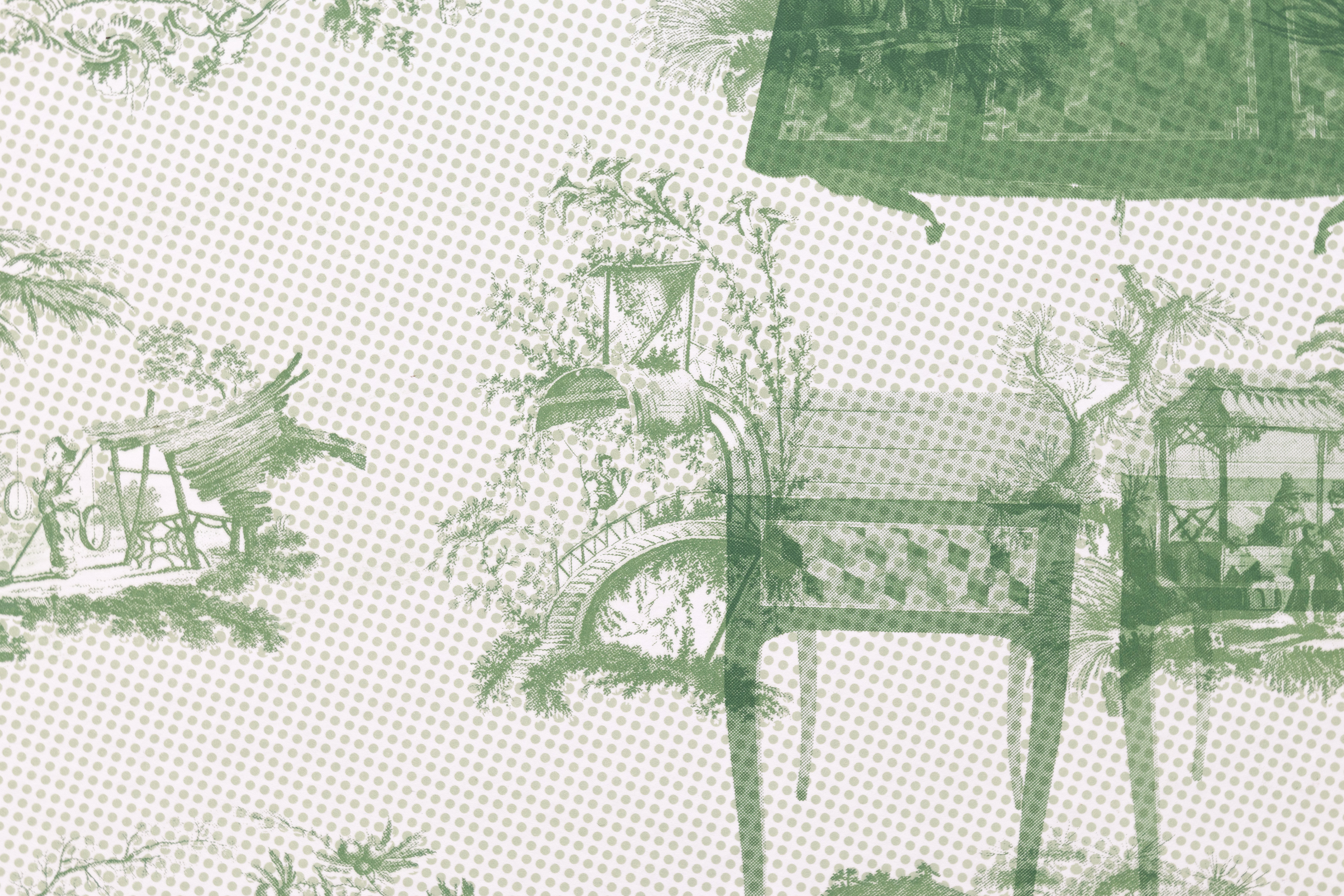

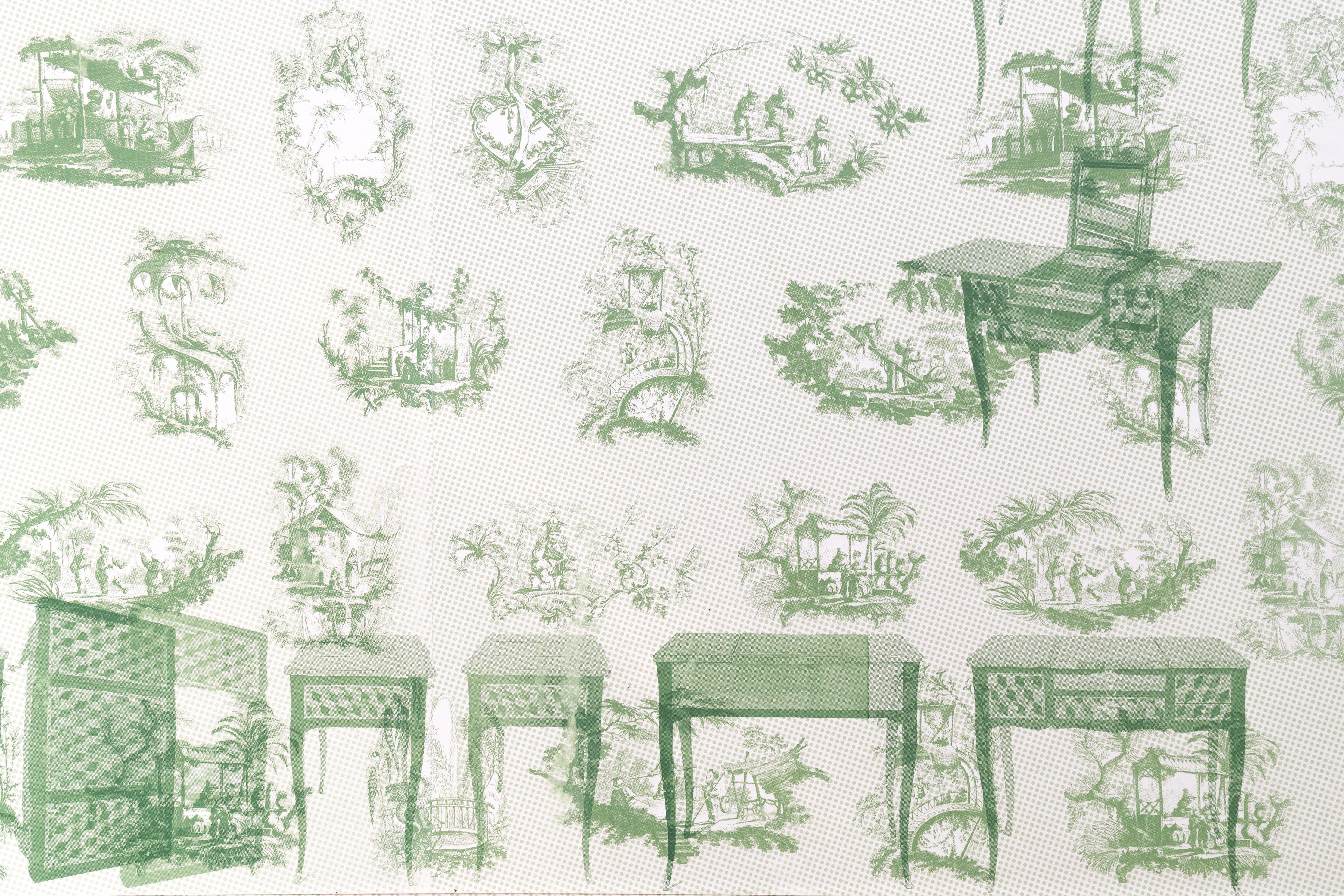

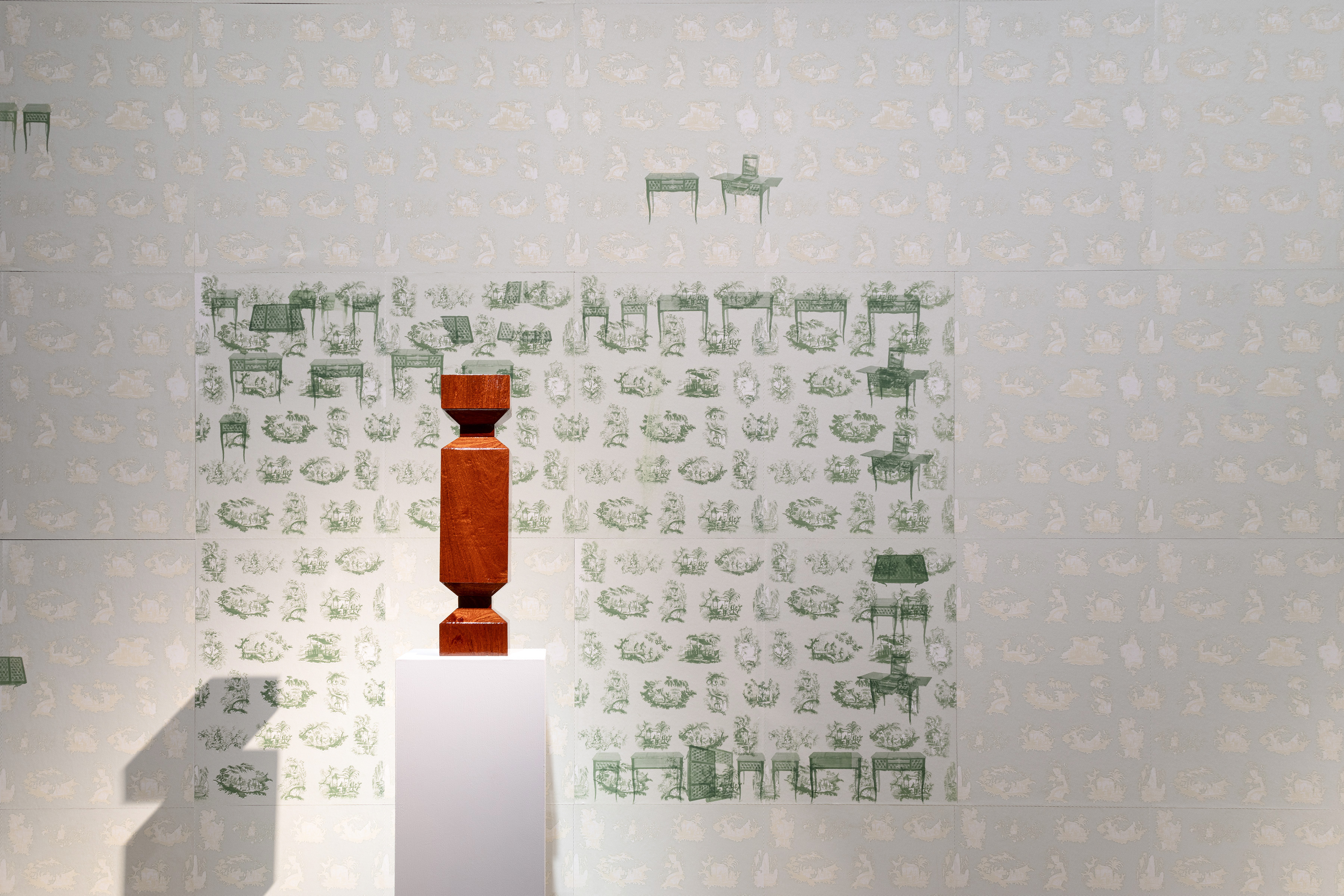

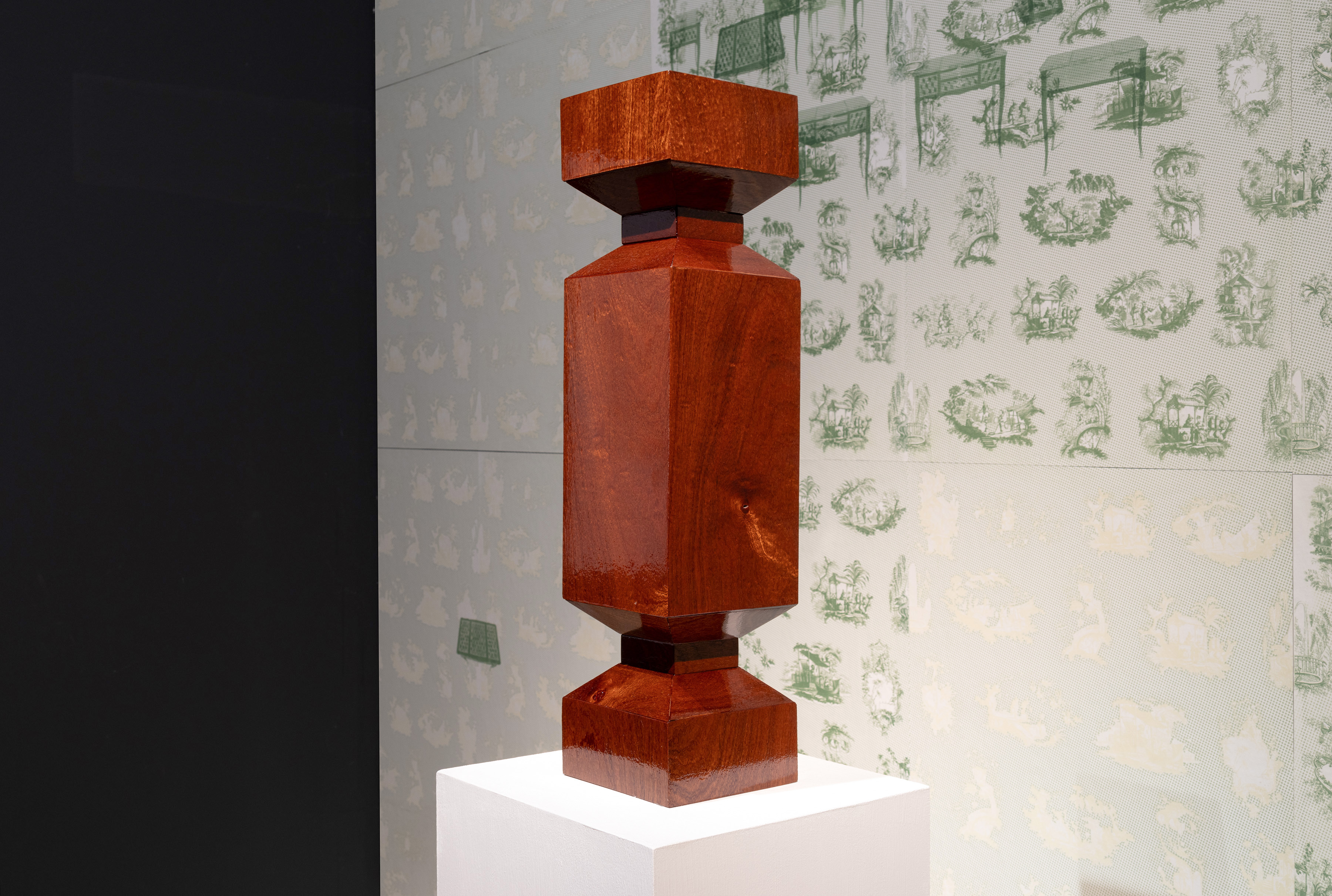



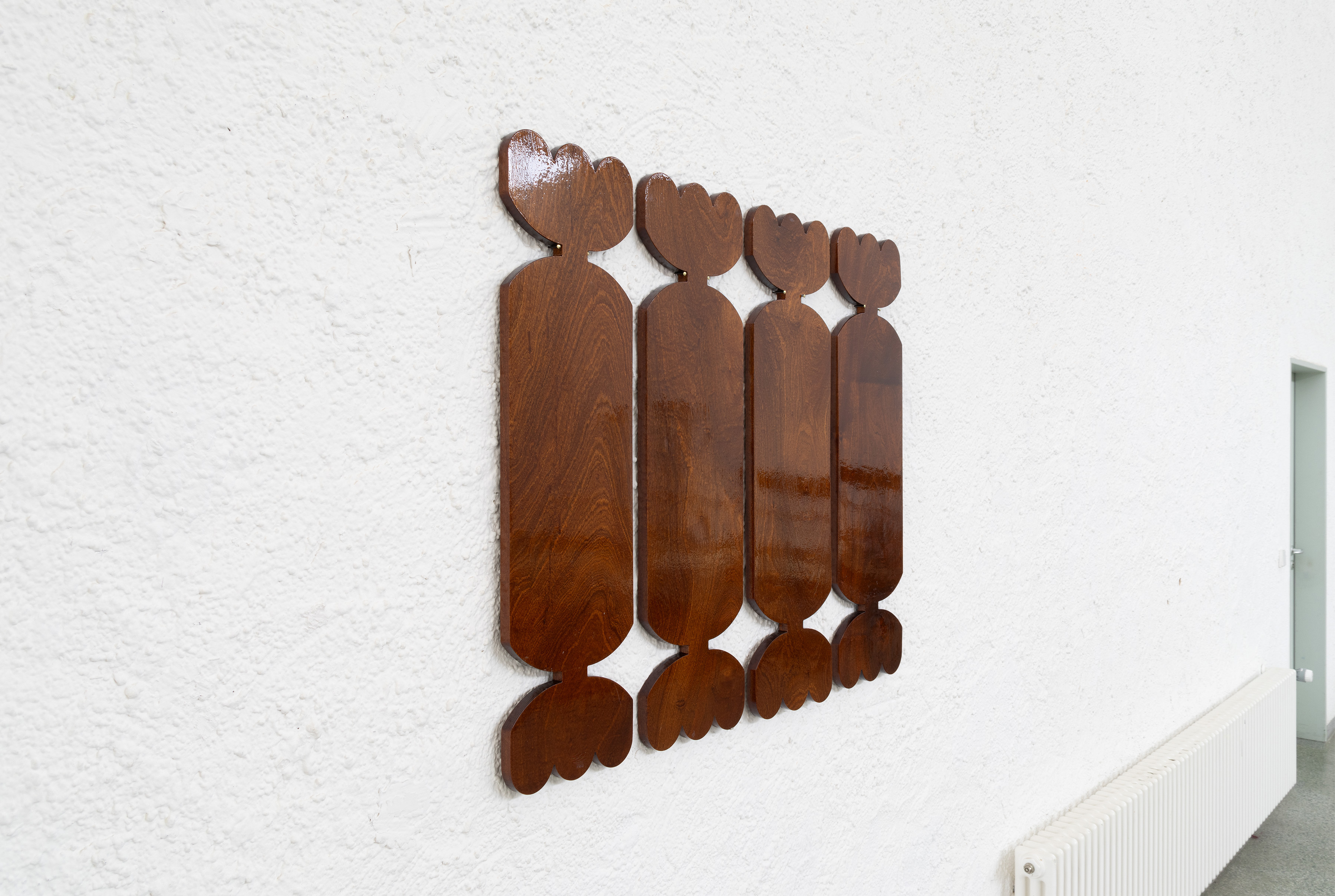

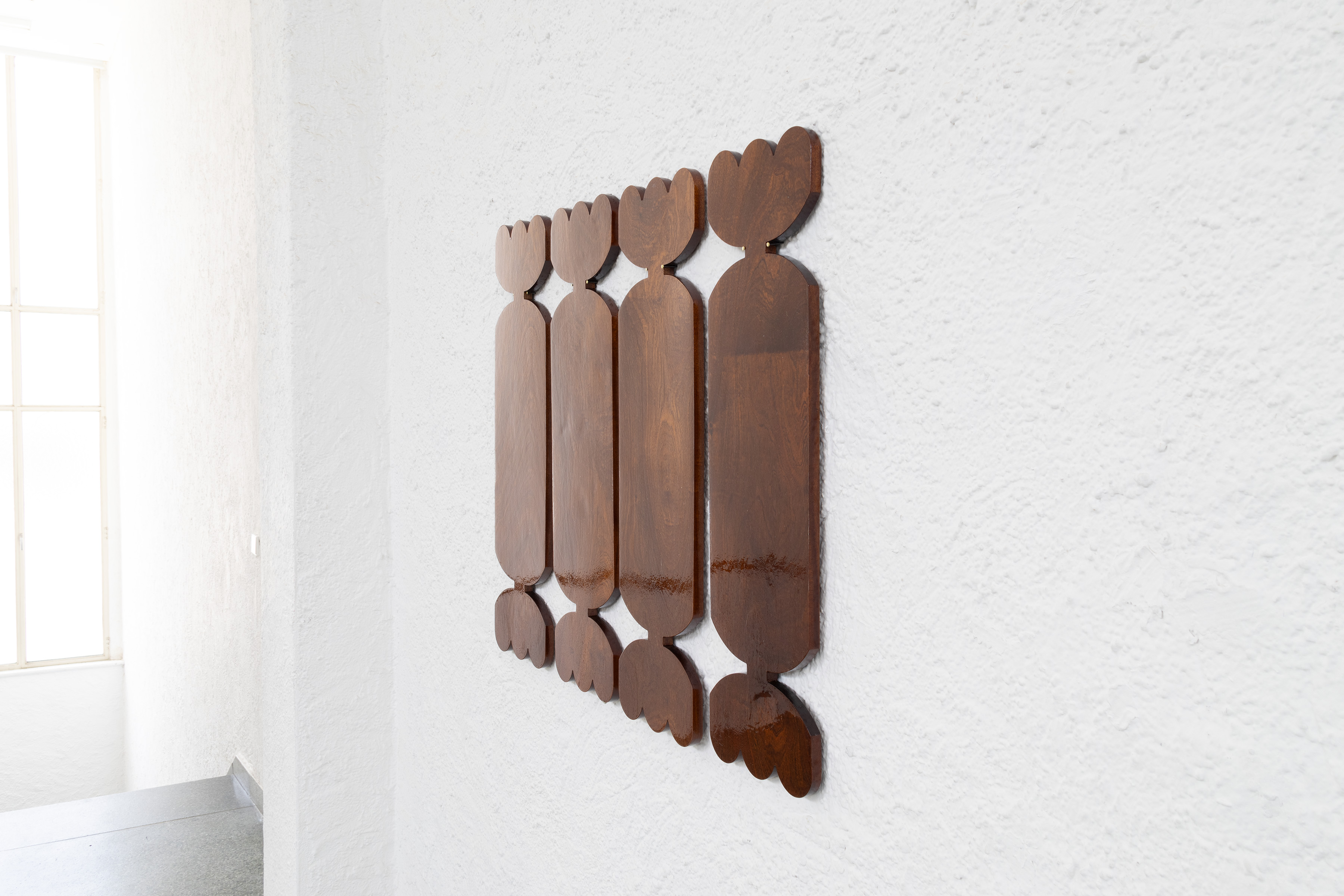
In the Blue Willow Room, She Promises the Possibilities of the Real , 2025
Ming Yuan
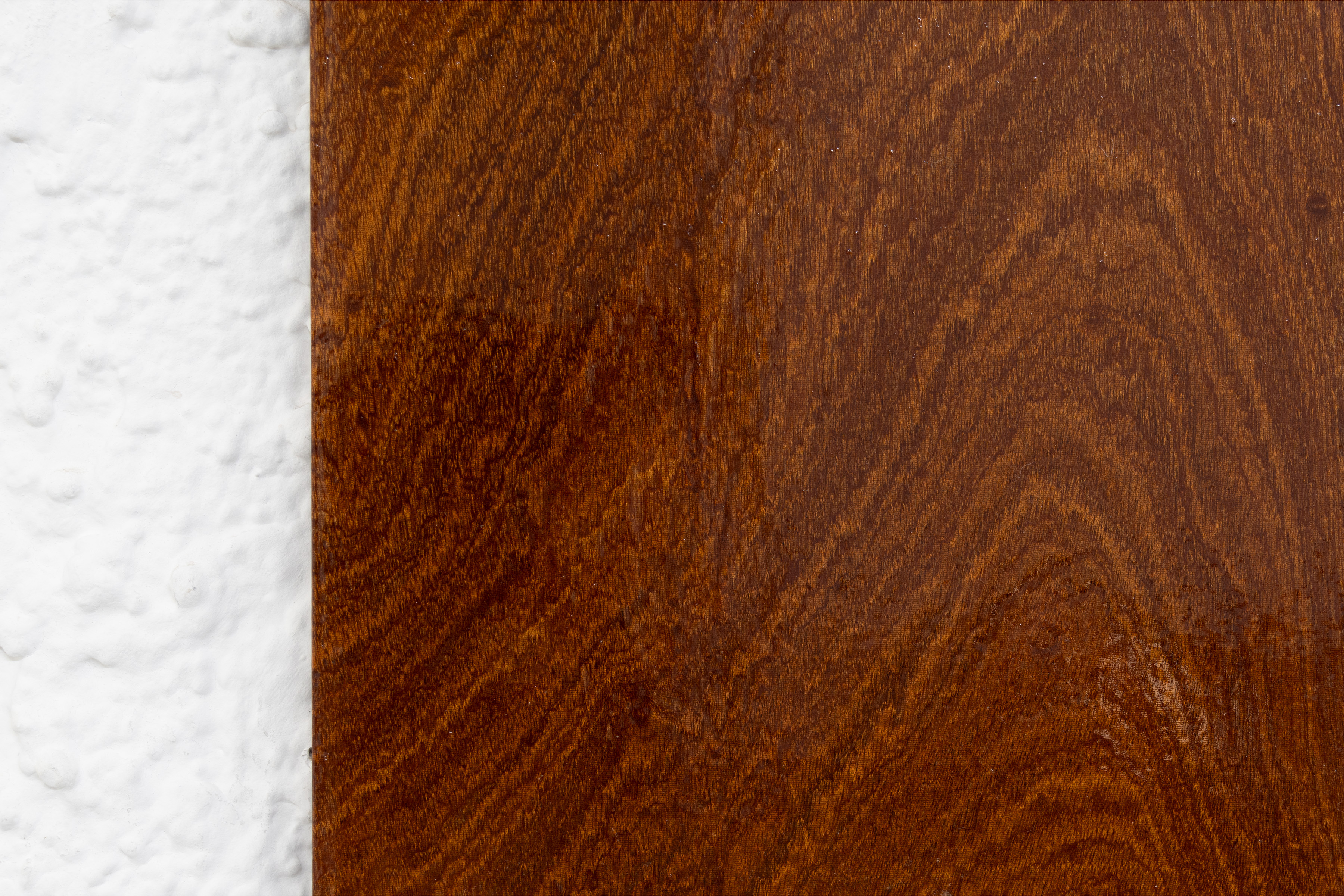
Siebdruck auf Papier, Tapetenkleister, Mahagoni, Yachtlack
591 x 400 x 100 cm
part of the Städelschule graduation show 2025
Ming Yuan
Siebdruck auf Papier, Tapetenkleister, Mahagoni, Yachtlack
591 x 400 x 100 cm
part of the Städelschule graduation show 2025
MING YUAN
In the Blue Willow Room, She Promises the Possibilities of the Real
15.07.25-11.08.25
Overture
Städel Museum, Frankfurt am Main
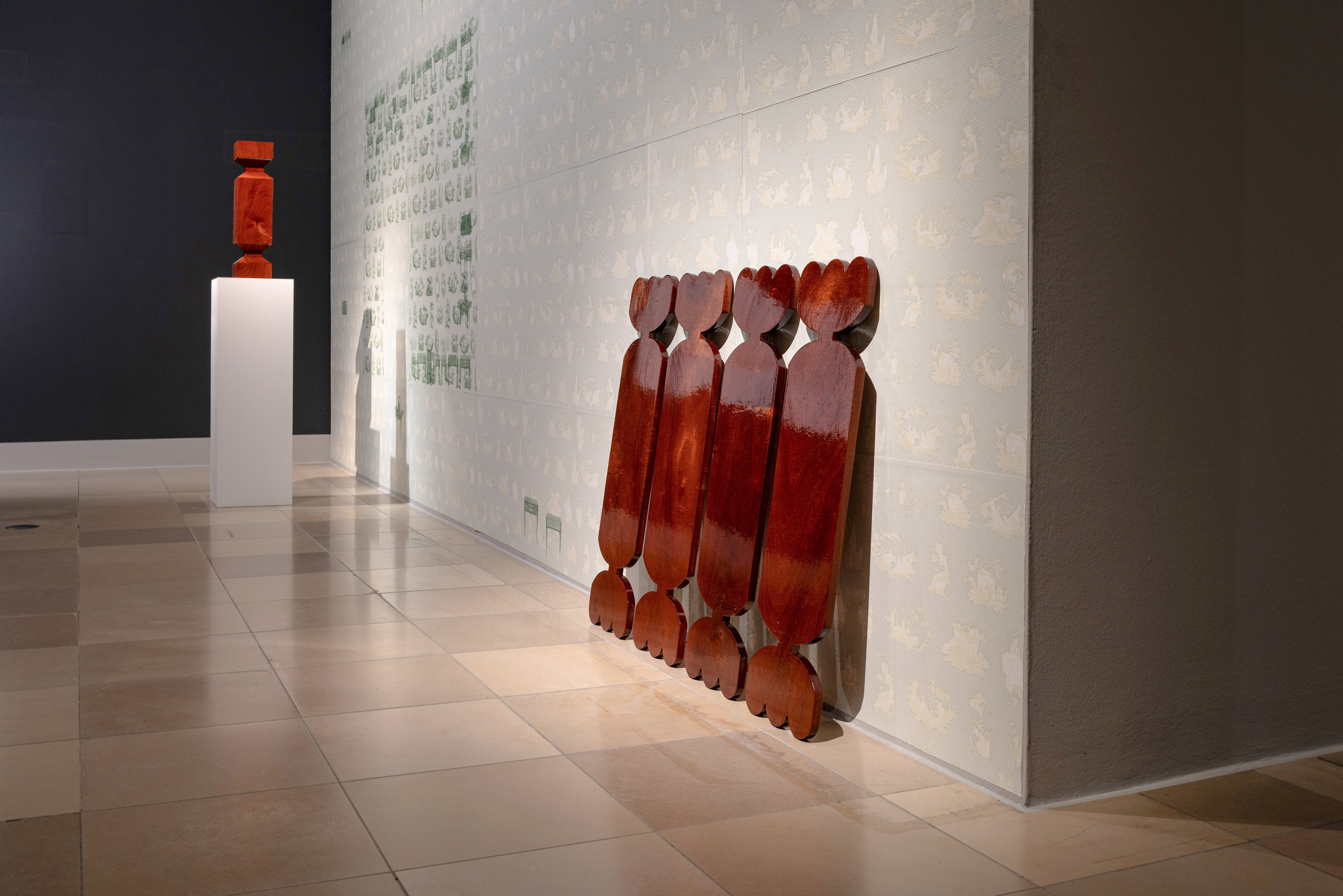
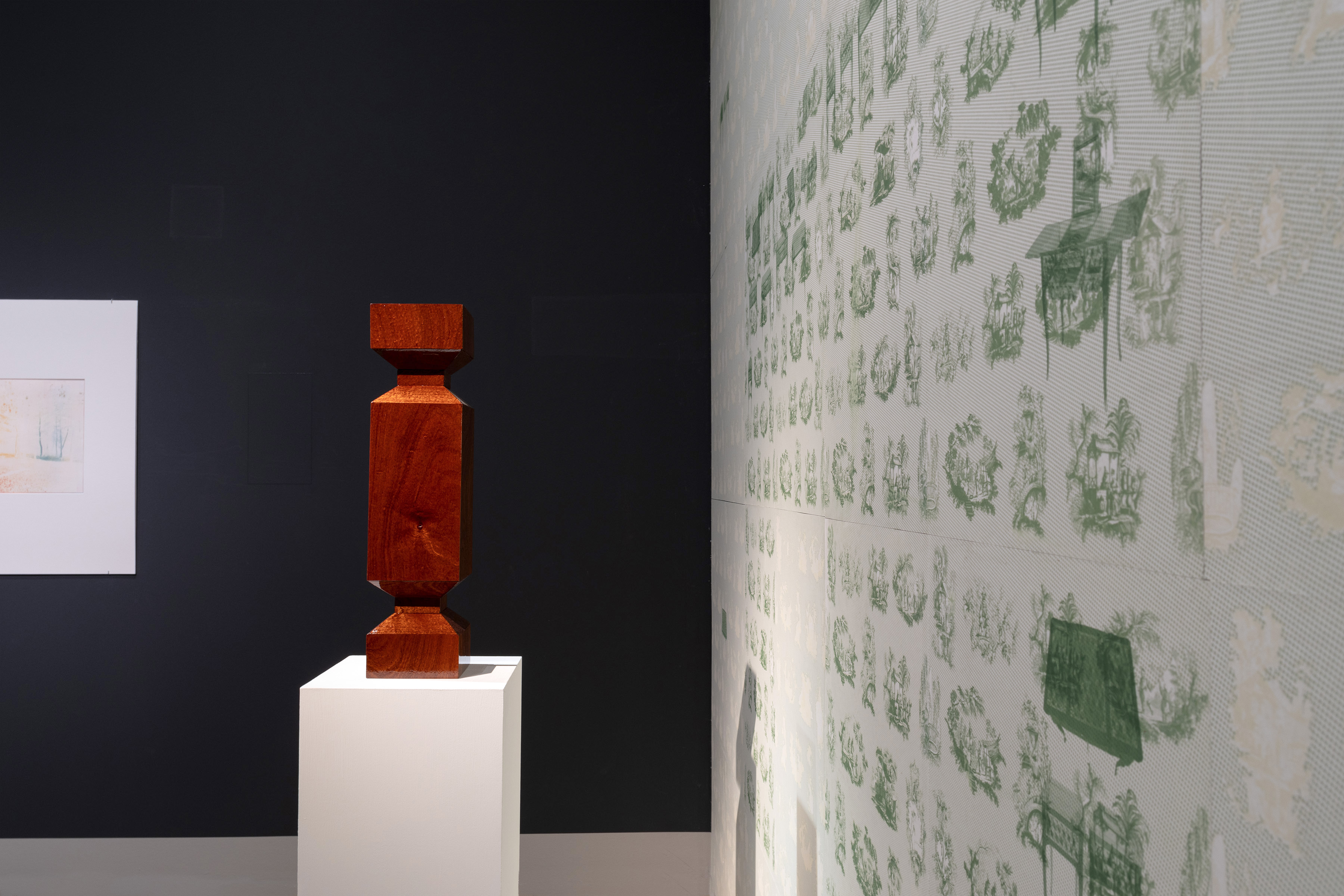
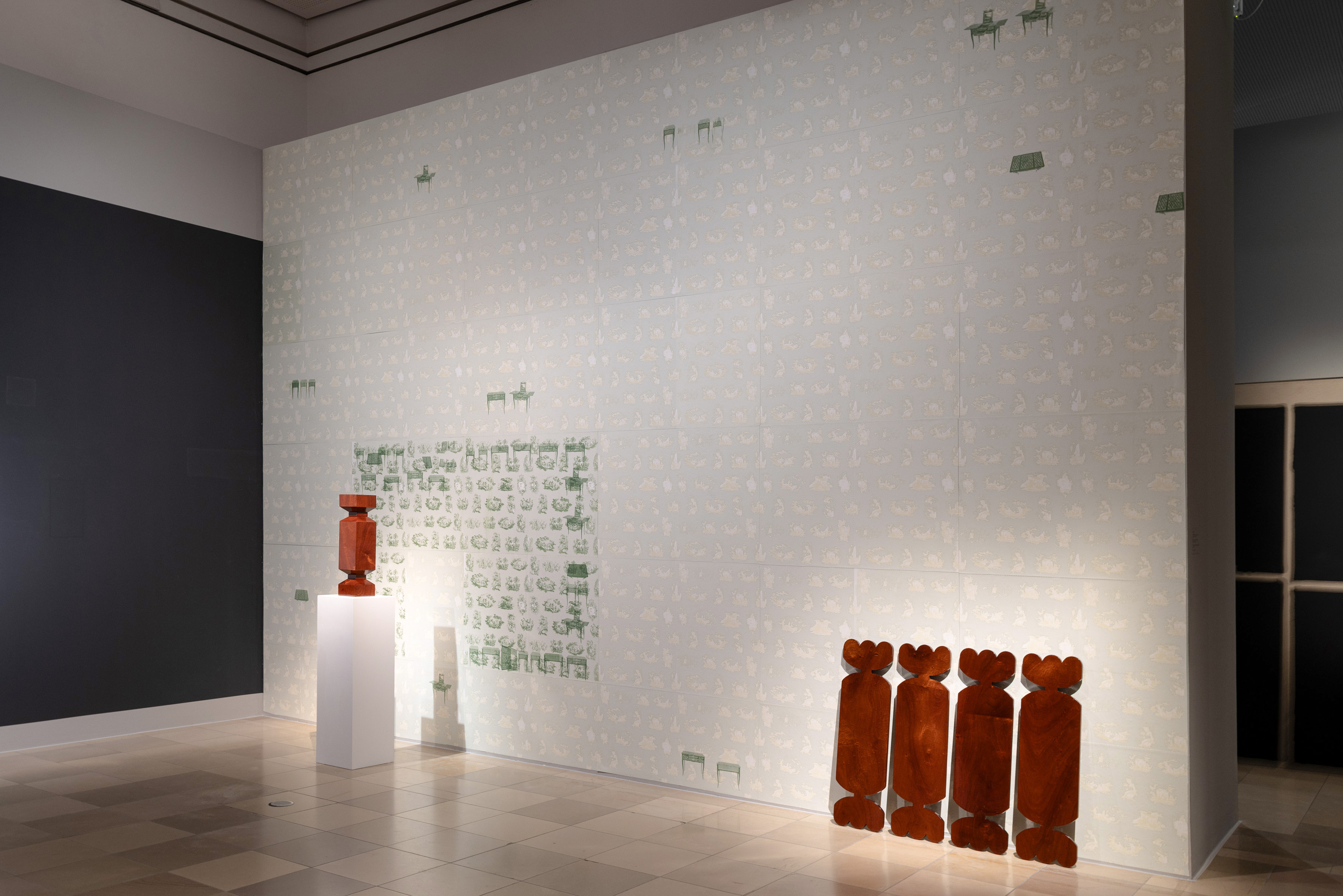
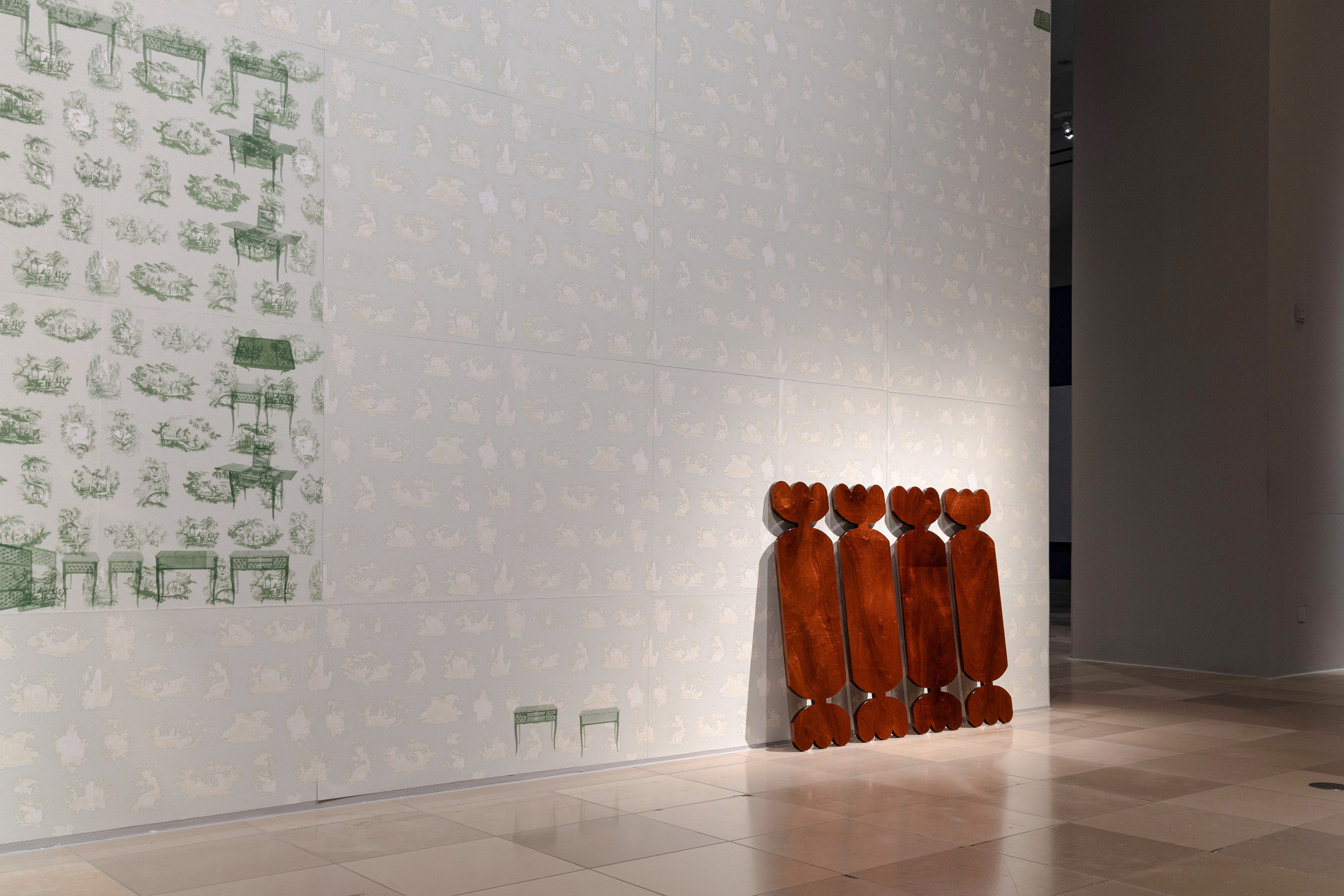
The blue willow room operates somewhere between boutique, shrine, and personal archive. It resembles a room hollowed of conviction but crowded with implication. The space oscillates between too empty and too full, staging a (time based) choreography of overloading display and scrutinised erasure. Suspicion and kitsch flicker briefly before they are silenced. Beauty becomes a system of control, stretched across the illusion of presence and the weight of absence, manifesting how object turns into subject in drag.
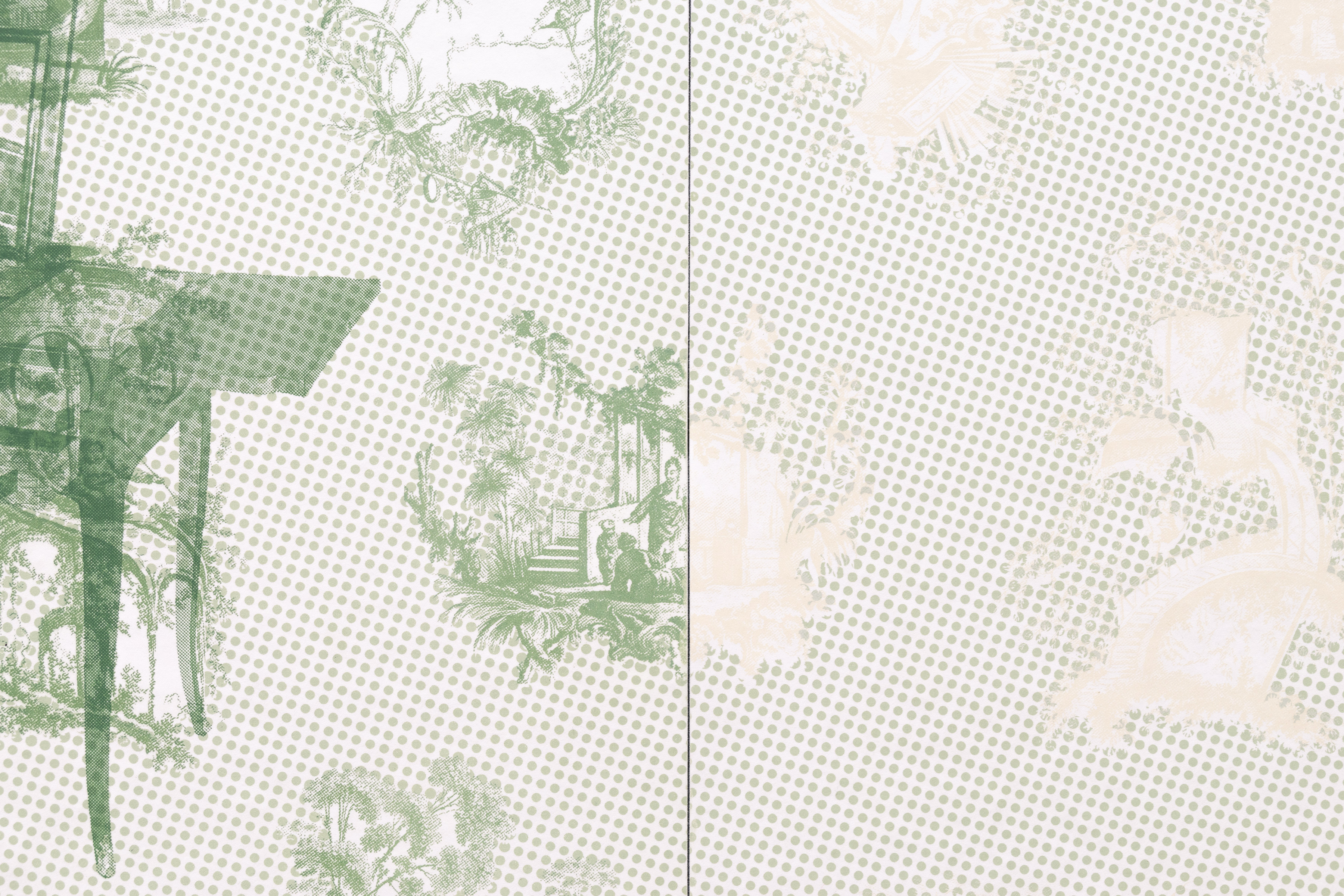
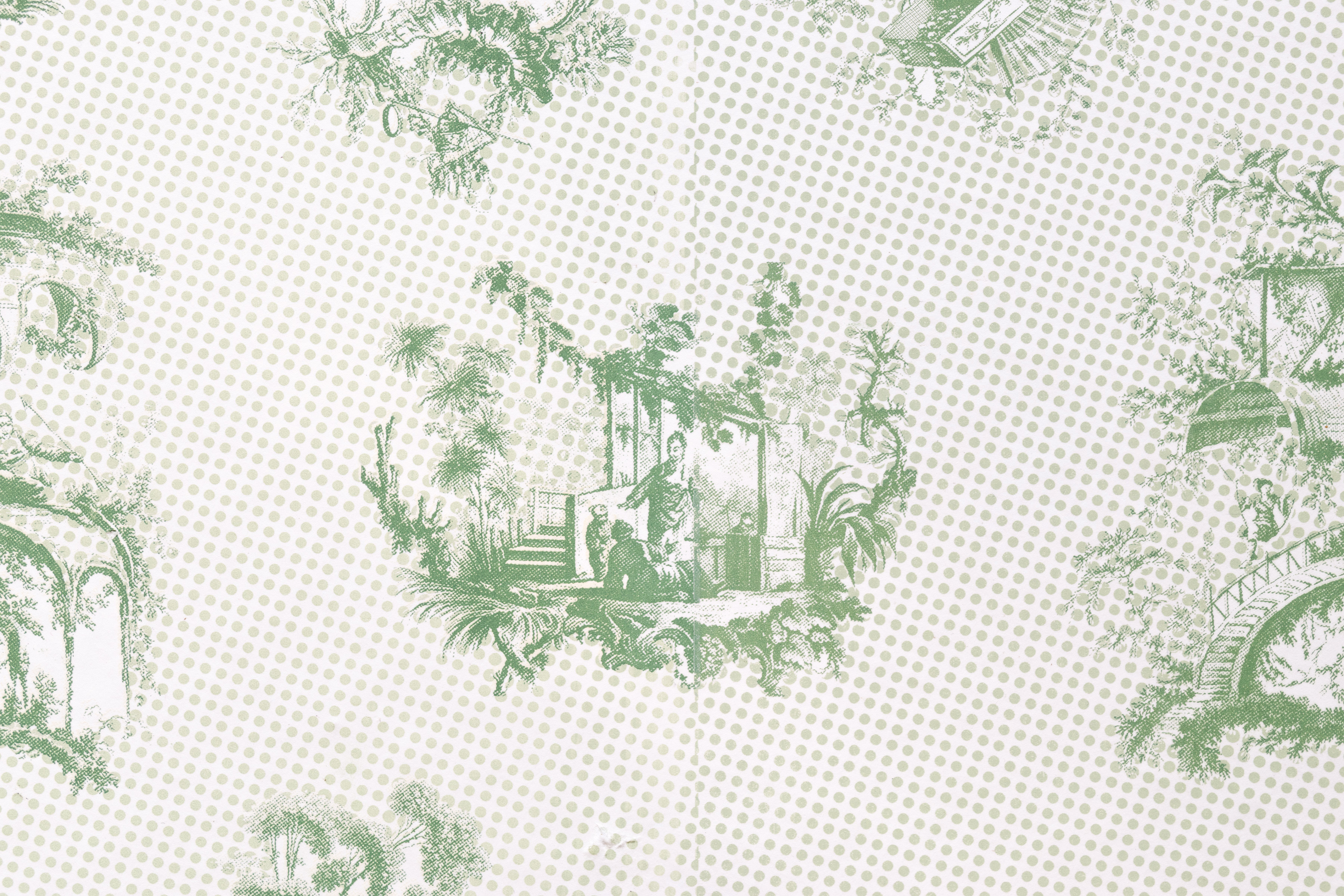
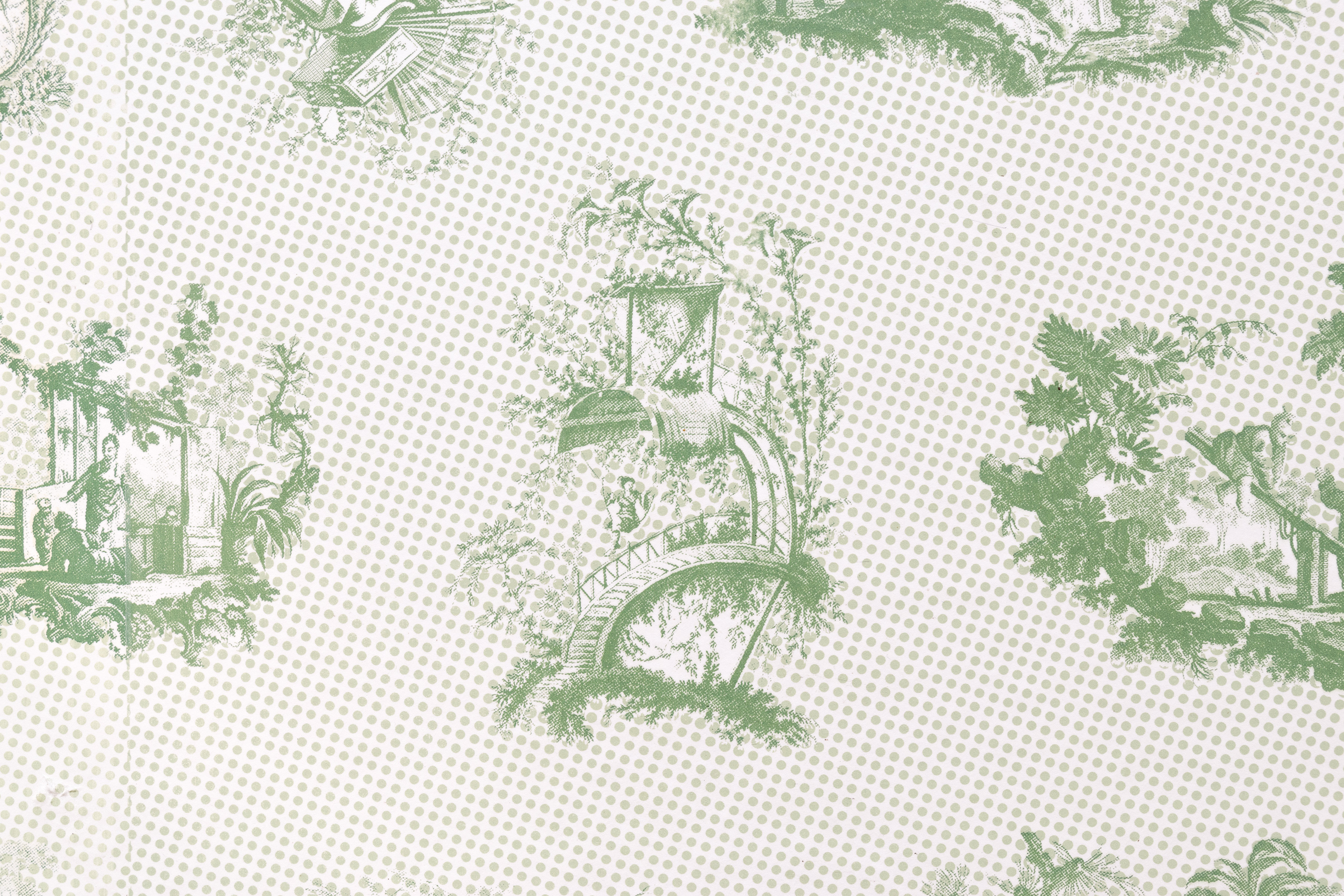
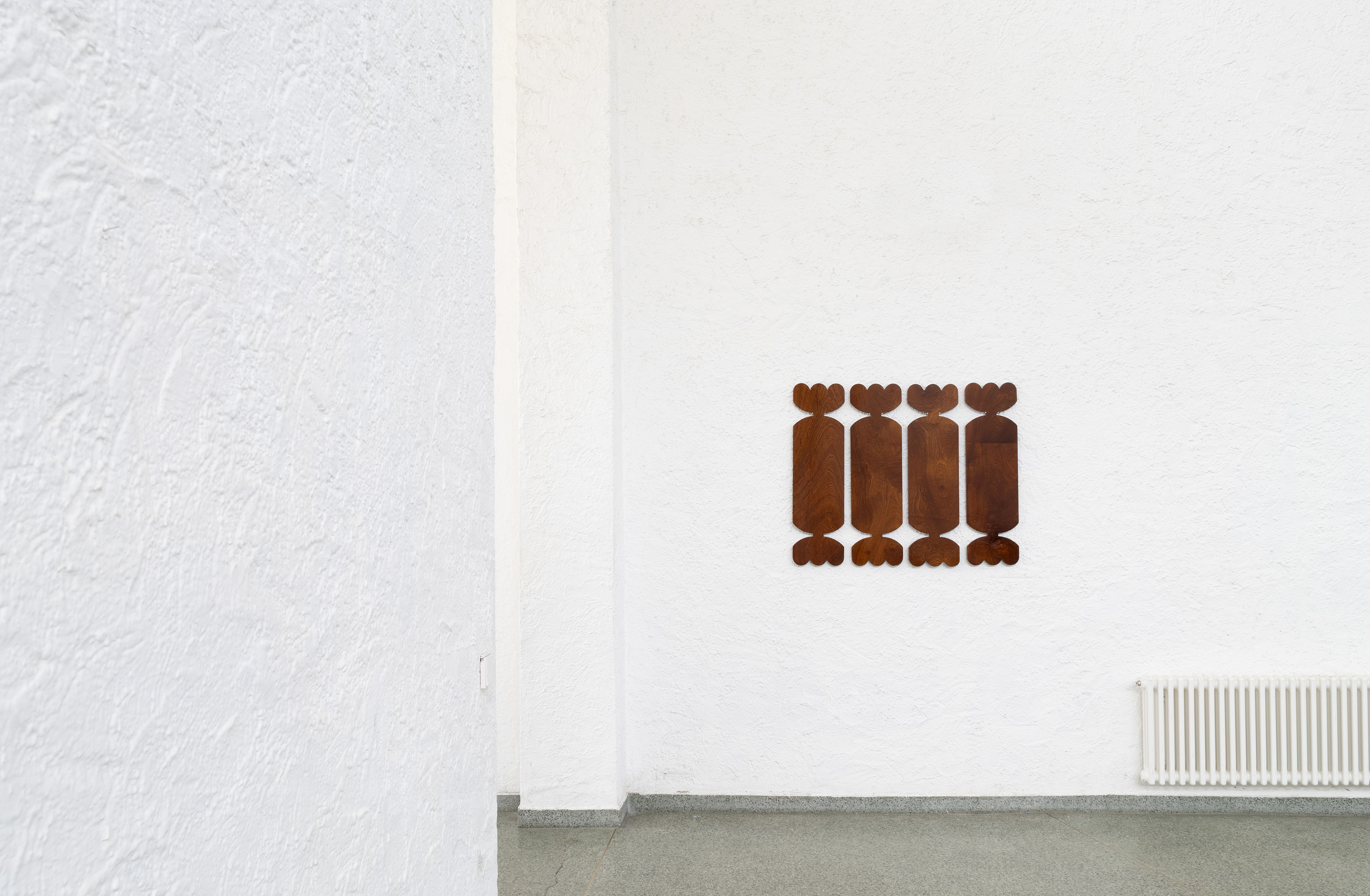
Using hand-silkscreened toile de jouy wallpapers and uncanny sculptures of yacht-varnished mahogany, Yuan unwraps her own visual logic. Amidst the immediacy of ornamental overload, suspicion unveils gradually: the true ornament of the blue willow room is the alibi of a racialized girlhood. It is implied, withheld, and displaced.
In The blue willow room, as the title suggests, she promises the possibility of the real. But the real remains suspended in decoration, sublimated by desire, and haunted by ornament’s capacity to conceal as much as it reveals.
In the Blue Willow Room, She Promises the Possibilities of the Real
15.07.25-11.08.25
Overture
Städel Museum, Frankfurt am Main
The blue willow room operates somewhere between boutique, shrine, and personal archive. It resembles a room hollowed of conviction but crowded with implication. The space oscillates between too empty and too full, staging a (time based) choreography of overloading display and scrutinised erasure. Suspicion and kitsch flicker briefly before they are silenced. Beauty becomes a system of control, stretched across the illusion of presence and the weight of absence, manifesting how object turns into subject in drag.
Using hand-silkscreened toile de jouy wallpapers and uncanny sculptures of yacht-varnished mahogany, Yuan unwraps her own visual logic. Amidst the immediacy of ornamental overload, suspicion unveils gradually: the true ornament of the blue willow room is the alibi of a racialized girlhood. It is implied, withheld, and displaced.
In The blue willow room, as the title suggests, she promises the possibility of the real. But the real remains suspended in decoration, sublimated by desire, and haunted by ornament’s capacity to conceal as much as it reveals.
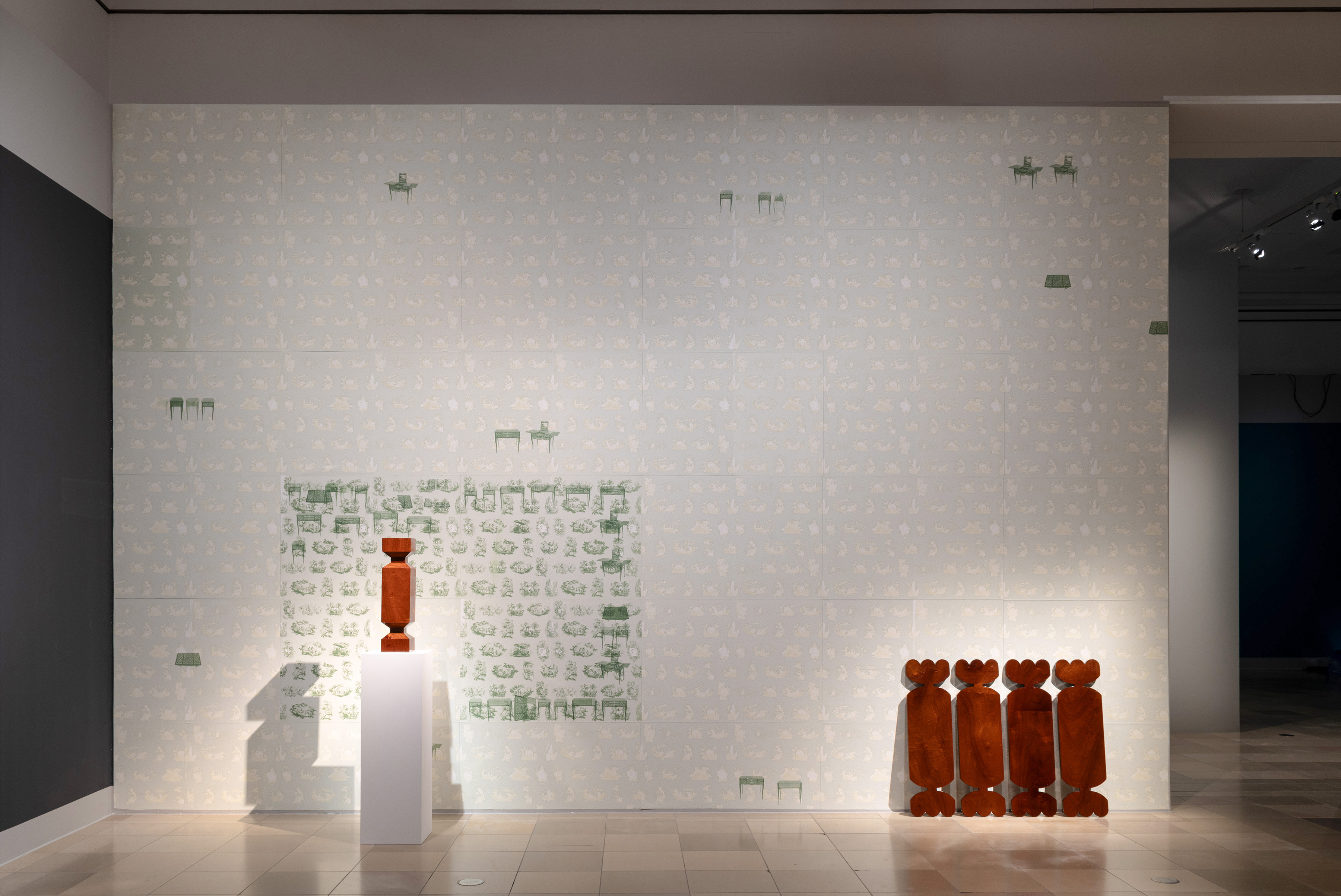

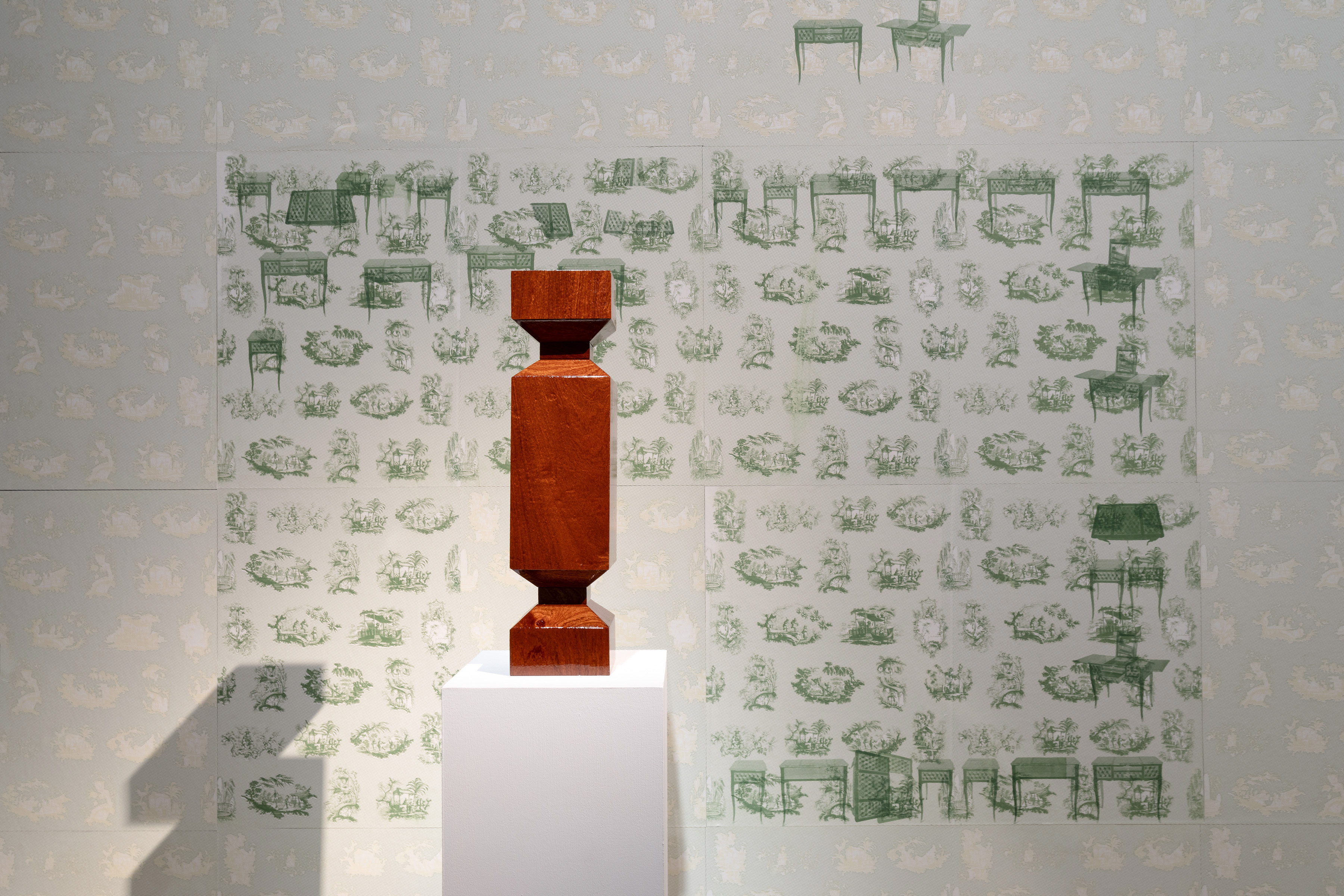
In the Blue Willow Room, She Promises the Possibilities of the Real , 2025
Ming Yuan
Siebdruck auf Papier, Tapetenkleister, Mahagoni, Yachtlack
591 x 400 x 100 cm
part of the Städelschule graduation show 2025
MING YUAN
In the Blue Willow Room, She Promises the Possibilities of the Real
15.07.25-11.08.25
Overture
Städel Museum, Frankfurt am Main
The blue willow room operates somewhere between boutique, shrine, and personal archive. It resembles a room hollowed of conviction but crowded with implication. The space oscillates between too empty and too full, staging a (time based) choreography of overloading display and scrutinised erasure. Suspicion and kitsch flicker briefly before they are silenced. Beauty becomes a system of control, stretched across the illusion of presence and the weight of absence, manifesting how object turns into subject in drag.
Using hand-silkscreened toile de jouy wallpapers and uncanny sculptures of yacht-varnished mahogany, Yuan unwraps her own visual logic. Amidst the immediacy of ornamental overload, suspicion unveils gradually: the true ornament of the blue willow room is the alibi of a racialized girlhood. It is implied, withheld, and displaced.
In The blue willow room, as the title suggests, she promises the possibility of the real. But the real remains suspended in decoration, sublimated by desire, and haunted by ornament’s capacity to conceal as much as it reveals.
Ming Yuan
Siebdruck auf Papier, Tapetenkleister, Mahagoni, Yachtlack
591 x 400 x 100 cm
part of the Städelschule graduation show 2025
MING YUAN
In the Blue Willow Room, She Promises the Possibilities of the Real
15.07.25-11.08.25
Overture
Städel Museum, Frankfurt am Main
The blue willow room operates somewhere between boutique, shrine, and personal archive. It resembles a room hollowed of conviction but crowded with implication. The space oscillates between too empty and too full, staging a (time based) choreography of overloading display and scrutinised erasure. Suspicion and kitsch flicker briefly before they are silenced. Beauty becomes a system of control, stretched across the illusion of presence and the weight of absence, manifesting how object turns into subject in drag.
Using hand-silkscreened toile de jouy wallpapers and uncanny sculptures of yacht-varnished mahogany, Yuan unwraps her own visual logic. Amidst the immediacy of ornamental overload, suspicion unveils gradually: the true ornament of the blue willow room is the alibi of a racialized girlhood. It is implied, withheld, and displaced.
In The blue willow room, as the title suggests, she promises the possibility of the real. But the real remains suspended in decoration, sublimated by desire, and haunted by ornament’s capacity to conceal as much as it reveals.